
When You Can’t Complain About The Weather… Talk Veggies
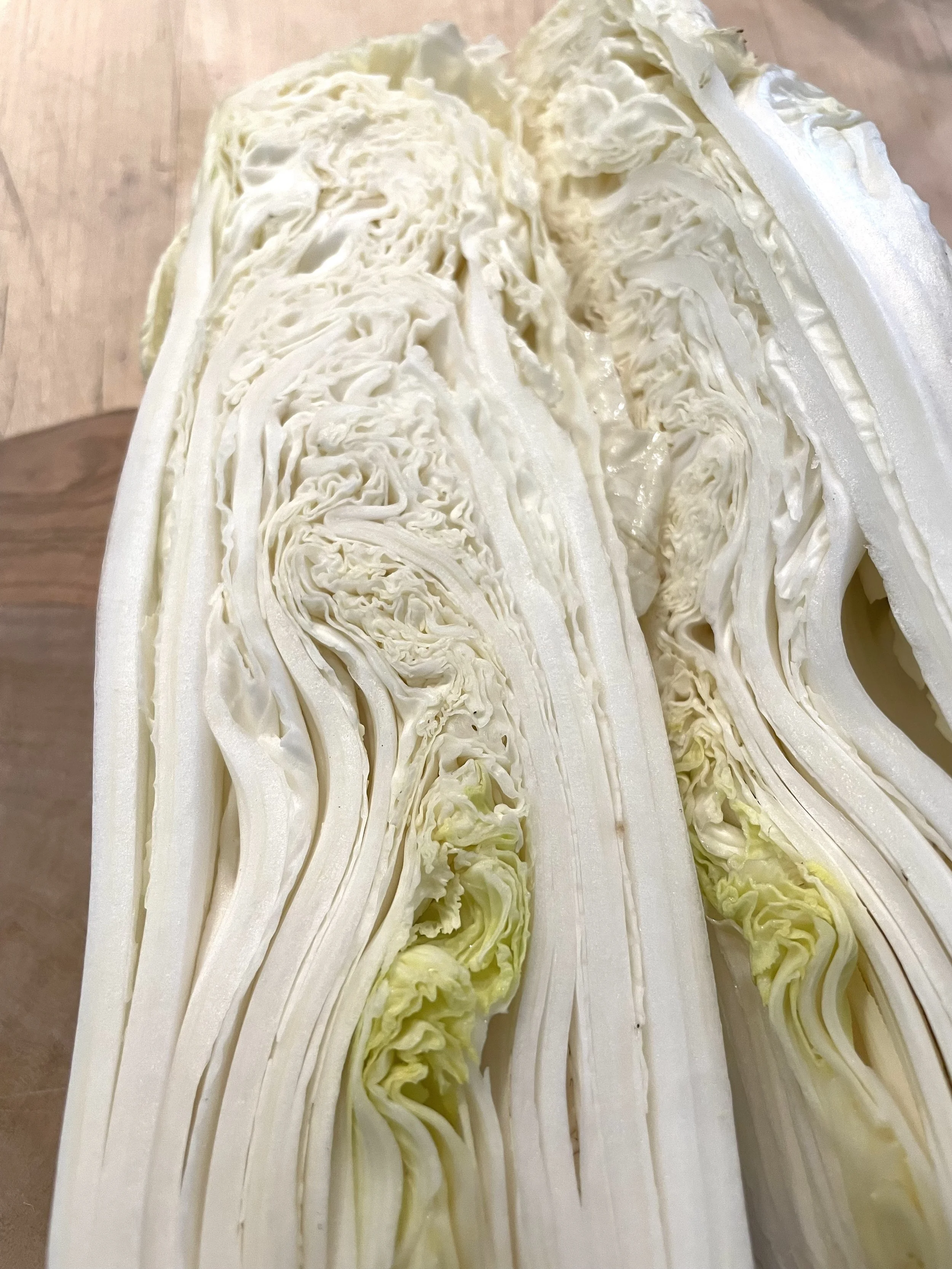
Cabbage is good all year, and even better in spring.
Long ago, my wise mother impressed upon me her rules for polite conversation. The one I think of most often concerns the weather. She would never complain about it, and believed doing so was tiresome, dull — almost a bit crass. To her, no humidity or bitter cold, no torrential rain, not even, I suspect, a tornado, was worth complaining about. Instead, she encouraged conversation about books or music, animals and nature. My mother was quite fond of silence, too.
At the risk of upsetting my dear mother (Hi, Mom!), I will remark upon the dreadfully cold winter we had this year, and try to not complain about it. It was so cold that our big dog refused walks and our little dog had her paws frozen to the ice on the back deck. It was so cold for weeks that we did little other than work and race home, where slippers and pajamas awaited. We ate bowl after bowl of soup. Though March weather is often fickle, I believe the coldest weather – and with it, the worst complaining – is behind us. We can look forward to spring and all of the joy the season brings. Surely, my mother would encourage talk of things to look forward to.
Spring brings longer days, blissfully mild breezes and green — so much green. With warmer temperatures and the farmers markets soon to be outdoors, there is spring bounty and harvest to look forward to. I’ve made a list here of my favorite spring vegetables. These foods are available either locally in spring, or they are at their best in spring. I purchased everything listed at the Honest Weight Food Co-op, the Troy Farmers Market or Market32.
Napa Cabbage: Oh, cabbage, how I love thee! Spring is an excellent time to eat cabbage, as it’s mild and crisp right now. Pictured here is Napa cabbage, which is endlessly adaptable: sliced thinly, it’s great in salad and slaw. Napa cabbage is tender and sweet enough to use as a lettuce wrap, yet sturdy enough for grilling or charring in a skillet. This cabbage is the classic and most common base for kimchi, the beloved Korean fermented dish.
More on Cabbage: I picked up a small head of bok choy, which we plan to eat but I could justify buying it for looks alone. With a curved, bulbous bottom that leads to graceful, relaxed leaves, this cabbage is like a nude, stepped straight from Renaissance painting. Bok choy is a Chinese cabbage, and becomes silky and tender when sauteed over high heat. Typically seen halved or quartered and then sauteed or added to soups, it adds color and texture to many dishes.
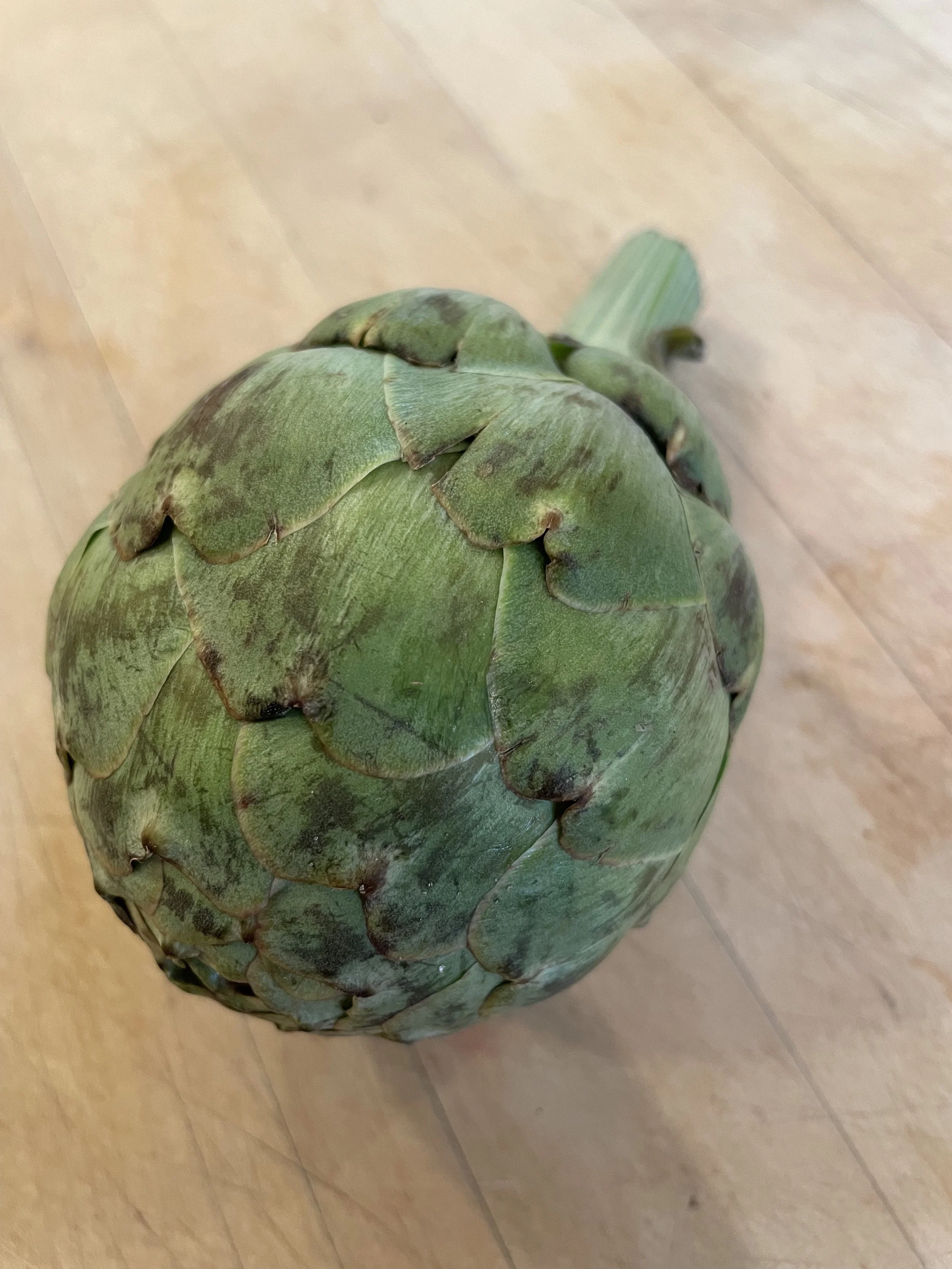
I ❤︎ artichokes.
Artichokes: There are people, and there are artichoke people. The latter are fanatics, dedicated souls who search markets, groceries and everywhere in between in search of the perfect globe. When the prize has been found, they hurry home to trim, slice, steam, stuff and fry them up. All of this, for a few small bites. It’s dedication, indeed. You will find artichokes among the vegetables, but they’re actually an edible flower, with a slightly bitter flavor that gives way to a buttery and nutty taste when cooked. The outside needs to be firm and the leaves tightly closed when you’re choosing.
Peas of All Shapes and Sizes: Peas are an early spring vegetable and if you can get your hands on them at the farmers market, buy yourself a sack of shelling peas. Then, sit down with someone you love and shell peas. There's something about shelling peas that encourages meaningful conversation and my mother would approve. There’s also plenty of other pea-family options in springtime: sugar snaps (pictured), snow peas and pea shoots. Though these all vary in shape and approach, the pea flavor is a flagship of springtime tastes: sweet, grassy and a great accompaniment to butter, cheese and meats in savory dishes. All peas can be eaten raw or gently cooked.
Arugula: If you like salad greens with lots of flavor and a robust, deep green color, then I’ve got a salad green for you. Arugula is a leafy green in the mustard family and it’s got serious personality. In fact, each bite of this peppery leaf packs a punch, with notes of black pepper and a pleasant bitterness. Arugula is especially nice in salads, simply dressed with olive oil and lemon. I also substitute arugula for parsley in recipes, because it allows me to be lazy and not pull leaves from stems. They have a similar flavor but arugula’s stems don't carry the bitter taste (in a bad way) that parsley stems do.
New Potatoes: Not to be mistaken with plain old potatoes that are small, new potatoes have been harvested early, and so their skin is very tender and their flesh is creamy and sweet. These gems can be found at the farmer’s market for a short time in spring. I like to steam these potatoes and serve them with a drizzle of good tasting extra virgin olive oil and a sprinkle of sea salt. It’s a preparation that lets the flavor of this special vegetable shine.
Asparagus: These tender stalks are certainly the unofficial mascot of spring. Of course, we can find asparagus at any time of year in the grocery store. But if you seek out asparagus stalks in early spring, you’ll find them to be at their best: flavorful and moist. I like the thinner stalks for their texture (they will retain less moisture when steamed). Choose stalks that have tightly closed buds, firm stalks and bright color. Asparagus is easy to prepare: it is good roasted, sauteed, stir fried, steamed and goes with everything from lemon to cheese and salty meats. You can even, with good results, put asparagus on a pizza.
Spinach: Spinach is the workhorse of the leafy green family. It’s salad, it’s part of a sauce, it’s filling in pastries and adds body and color to soup. It’s even, in some unfortunate decisions, hidden in dessert. This time of year, you can find at the farmer’s market young, tender leaves of spinach and once you have that big bag at home, there is a world of possibilities.
Radishes: These root vegetables are another for those who appreciate beauty. The perfect, lipstick-pick color of their round bulbs is a lovely contrast to the bright green leaves that hover over them. Radishes have a bite, in a good way. When sliced thinly, a radish is the perfect partner to tender baby lettuce leaves and shredded carrots in a fresh green salad. When doused in olive oil and roasted in the oven, their bitter bite becomes sweet and buttery, almost as if by magic.