
Onions 101: A Primer (And a Love Letter)
Cabbage is good all year, and even better in spring.
In every family, workplace or circle of friends, there is always one person who steadfastly holds the center, the one we orbit around. They aren’t necessarily the loudest voice or the one in the spotlight; they are the backbone, the workhorse, the beating heart that everyone else leans on. You know the person, right?
In my house, that person is my husband. He’s the first to call for a flat tire, a clogged sink, a sad day at work, or even just a better way to arrange the living room furniture. The truth is, we are immensely lucky to have him.
There is a striking similarity between this kind of person and the foundation of almost every dish we love and cook often in our house. It’s the humble onion — the ingredient with fortitude and staying power. If it’s weird to compare my husband to an onion, so be it. Like the stews and salsas we crave and eat, we simply cannot do without the onion, and we certainly cannot do without him.
Onions are so integral that on occasion, when I’m not sure exactly what we’ll have for dinner, I start by chopping an onion. The rest always comes. I count on it to not only anchor that dish, but to inspire it. I think we all rely on Paul this way: the husband, the father, the friend.
On the eve of our 27th wedding anniversary, I’m dedicating this story to him. It’s been 27 years of meals built on flavorful, aromatic onions, and a lifetime of him holding us all up. Happy anniversary, Paul! And may you all have a constant person (and plenty of onions) in your lives.
Yellow Onion
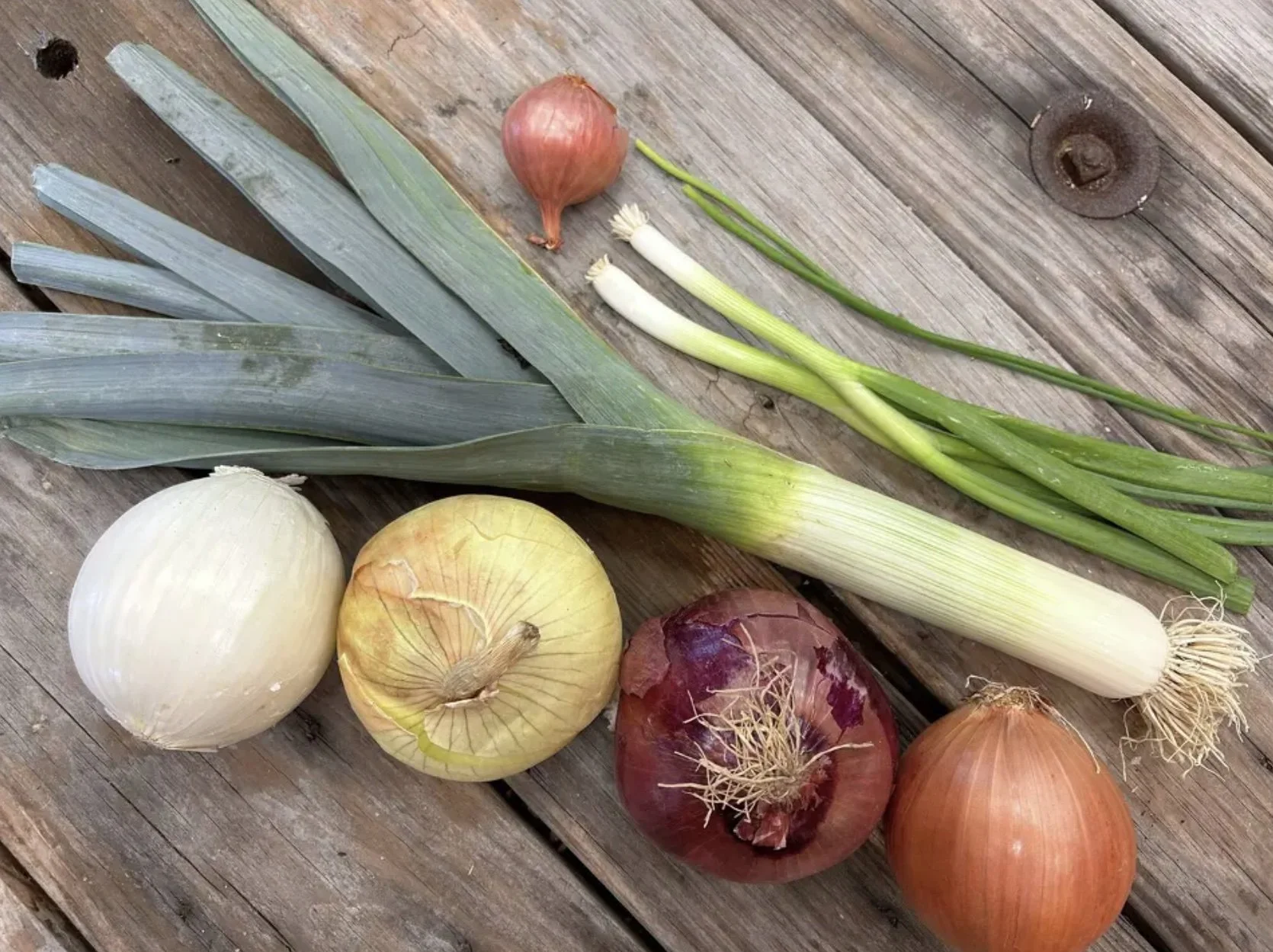
Yellow onions are your basic, do-anything-with-them onions. Fry, grill, roast, simmer, sauté, eat them raw, there is no wrong answer with a yellow onion. You may see yellow onions marked as a Spanish onion, a variety of yellow onion, much like a Vidalia (see below). This onion is readily available — in fact the most-grown onion in the U.S. — and is endlessly versatile. Use it in place of any other onion, if you need to.
Vidalia Onion
These are a type of sweet onion that come from one place (you guessed it: Vidalia, Georgia) and are harvested from late spring through early fall. They are low in the acid that causes tears and higher in sugar content, making them a good all-purpose onion. They cook up mellow and sweet, are fine raw and good just about any way you prepare them. This may be an old wives’ tale, but I was taught to buy sweet onions that are as squat as you can find them; they’ll be sweeter that way.
White Onion
A white onion is similar in shape to a softball, snowy white, and mild in flavor. This bulb is popular in Latin American cuisines, and anywhere you want to toss a few raw onions (think pico de gallo, pizza and salads). You can slice, dice and saute a white onion just like a yellow one; the flavor will have less bite.
Green Onions or Scallions
Green onions and scallions are the same thing and can be used to add both color and flavor to many dishes. Green onions are the immature bulb of an onion plant: think a baby onion. They have a delicate texture and flavor, making them good for garnish and salad topping. Recipes often call for trimming and discarding the dark green tops, but I ignore that advice and trim from the hairy-looking roots all the way up to the top. The bulbs have the most concentration of onion flavor, while the green tops are mild, like chives.
Red Onions
Red onions are more purple than red, and their beautiful color is part of the appeal. I love to make pickled onions from this type, and keep a vibrant, bright pink jar of flavorful salad-pizza-taco-anything toppers in the fridge. Red onions pack a bit more punch than white or sweet onions, so keep that in mind when serving them raw. Their zestiness goes well with the fresh flavors of a Greek salad or a flavorful pico de gallo.
Shallots
Best known for their use in French and Asian cuisines, shallots are indispensable in my kitchen. A shallot has mild onion flavor with a gentle touch of garlic. You can finely mince shallots for a vinaigrette, perfect on crisp greens with goat cheese. They are often crisp-fried and added to Thai noodle dishes, or pounded into curry paste. I like to keep shallots around because I’ll use one shallot instead of half an onion; then no need for plastic wrap or a forgotten, mushy onion in the crisper. I also slice shallots thinly, then soak in warm water for a few minutes before adding to salads; they are sweeter and milder this way.
Leeks
Leeks are another French favorite, best known for their use in soups and tarts. This allium is very mild. The white parts of this vegetable are best to cook with, as they are more tender. Keep the tough, fibrous green tops for making stocks and broth. A tip for preparing leeks: they tend to hold a lot of dirt, so chop them first, then rinse well and drain.
Chives
Chives are actually an herb in the onion family, and an important part of my summertime cooking dynamic. They’re among the first green anything to pop up in spring, and that alone endears me to them. With a sweet, mild onion flavor, chives are an excellent addition to salad dressings, aioli, dips and as a garnish when you want a plate to look pretty. Come mid-summer, they bloom gorgeous purple flowers that are also edible and pretty.
How to Cut Onions
The way you slice an onion matters. If you’re quickly sauteing onions as the base of, say, a soup, trim, peel and dice. They’ll cook down faster that way. If you’re looking for a longer, slower cook (for a batch of caramelized onions), trim your onion, peel it, and slice it into strips, pole to pole. By keeping the cells more intact, the onion cooks down slower and sweeter.
How to Store Onions
The best way to store fresh onions like green onions and chives is wrapped in a clean, dry towel and tucked to the back of the crisper. They will last for a week this way.
Any onion with a papery skin is best stored in a cool, dry place. The skin of these root vegetables protects them, so don’t wash or peel before storing. I keep extras hanging in a bag in my pantry, which tends to be cool all year long. The basement is also a good choice. An important note: keep your onions and potatoes away from each other in storage, because while they’re great friends in a soup or a salad, they shouldn’t be close while in storage. Onions emit a gas that will cause potatoes to rot, and no one likes a rotten potato.