
Peppers Of All Shapes, Sizes and Flavors
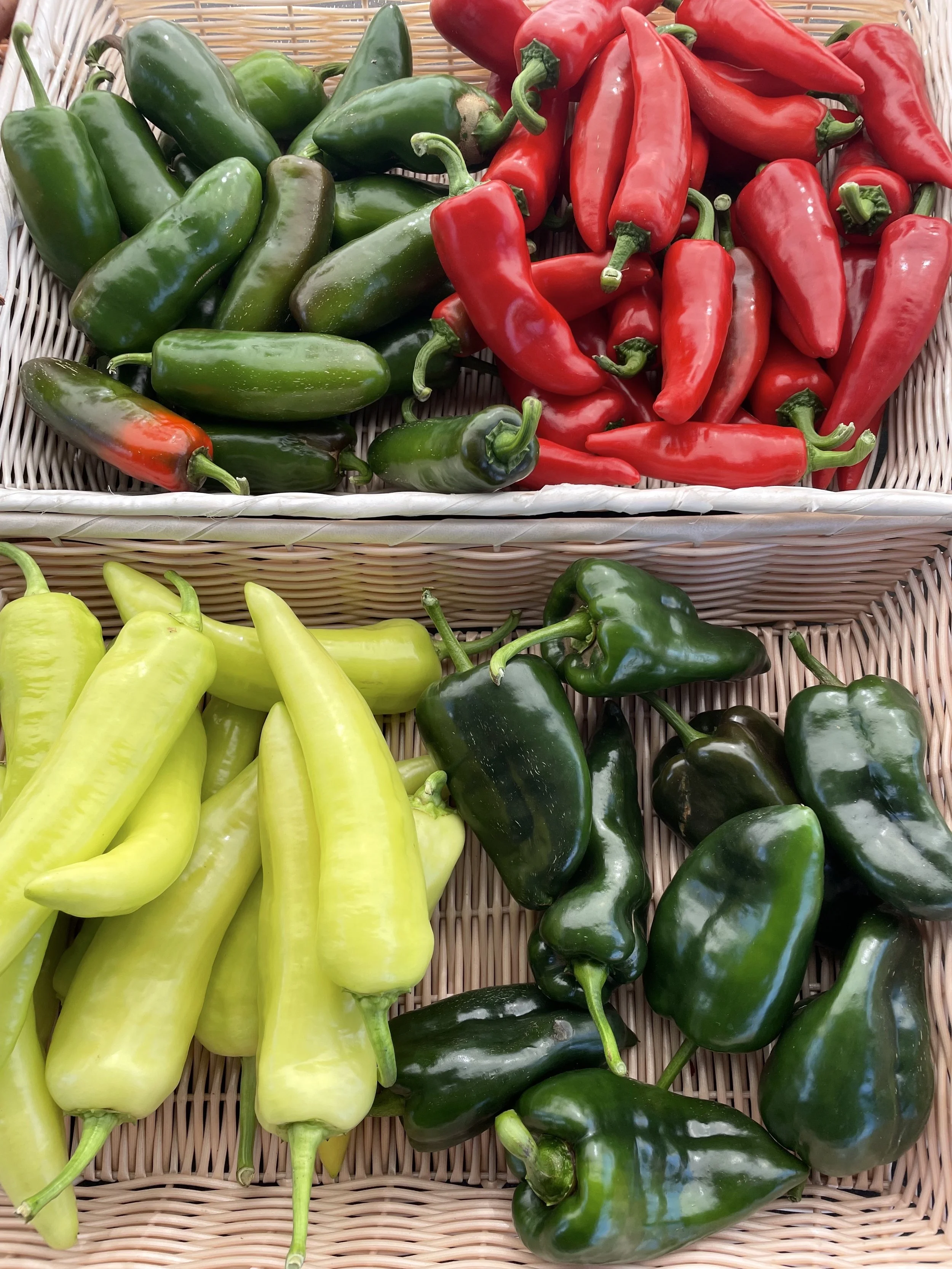
A basketful of beauties at the Delmar Farmer’s Market.
Peppers are the unsung heroes of the culinary world. It’s hard, really, to put all of the many kinds of peppers on earth into one category and call it “peppers” because they are so vastly different. I’ll get into the differences, but first, what all peppers – no matter their origin, spice level or color – do have in common is their unique ability to add visual interest and real flavor to different foods. There is hardly any other vegetable (or fruit) that is so widely used and beloved in cuisines across our globe.
Botanically, peppers are classified as a fruit, as they contain seeds and are grown from a flower. In the culinary world, a pepper is a vegetable and a spice, because of its savory and spicy qualities. And what qualities! There are so many reasons to love a pepper.
What draws me to this fruit-vegetable — aside from its depth of flavor and global connections — is its pure aesthetic beauty. Consider the rich, deep hues of dried chiles beside the bright tones of a freshly picked pepper, looking as though it were lifted straight from a box of Crayola crayons. That color palette alone brightens any salad, omelet or sandwich. Then there is the bulbous shape: so plump and round, they look as if they grew weary on the vine and simply plopped down in the field for a well-deserved rest.
If your experience with peppers stops at bell peppers and the occasional jalapeño, read on. Here is your guide to bringing more color, flavor and spice into your kitchen with the humble, beautiful pepper.
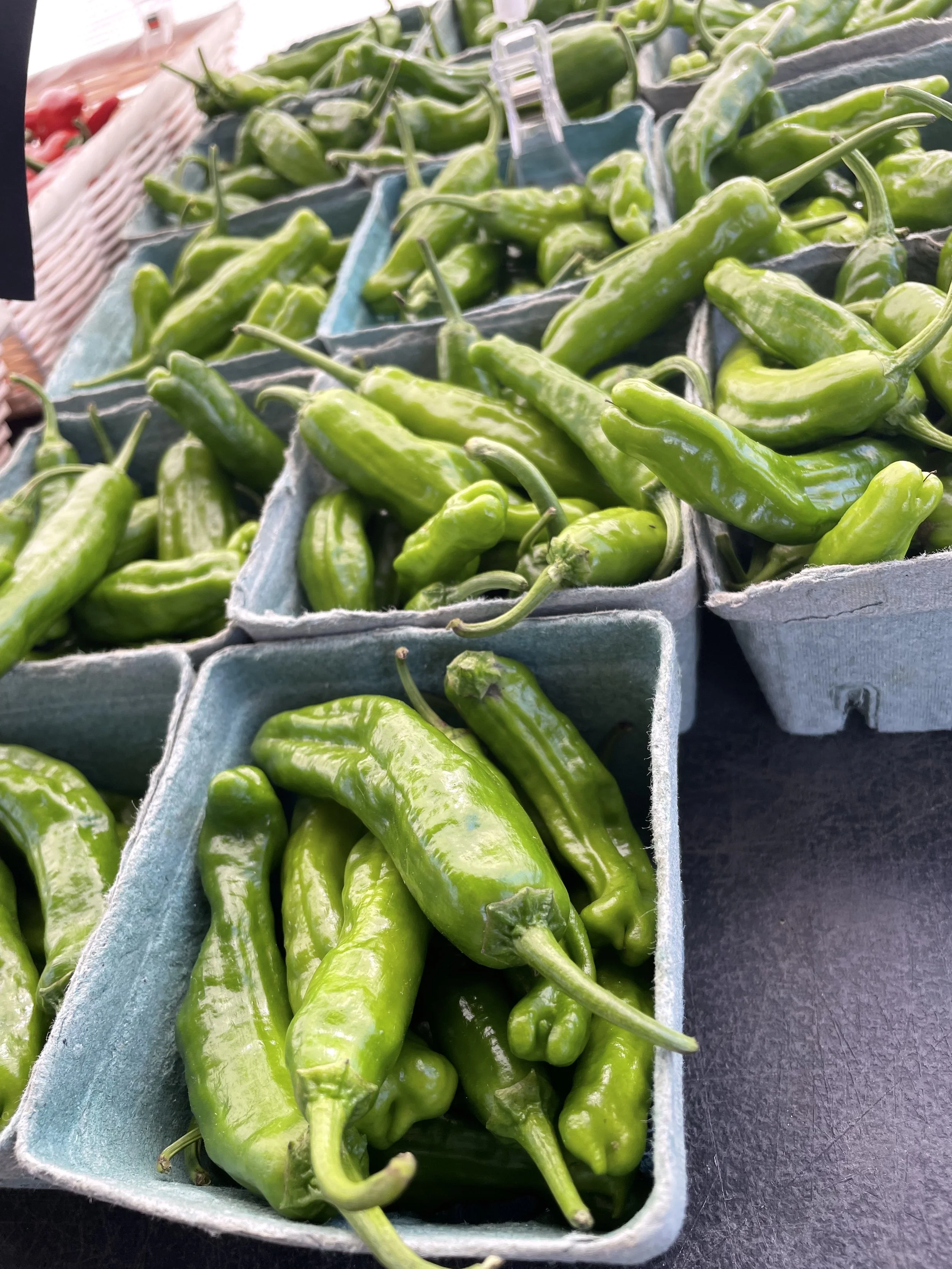
Shishitos: a favorite of chefs for their low heat index and delicious flavor.
Sweet or Hot?
To measure a pepper’s heat, look to the Scoville scale, created by pharmacist Wilbur Scoville in 1912. The scale spans a vast spectrum: a sweet bell pepper sits at a cool zero Scoville Heat Units, while a ghost pepper clocks in at a scorching 1,000,000 units — a clear sign for most home cooks to approach with caution. Hot peppers grow best in warm, dry climates. This geographic footprint aligns naturally with many of the world’s most famous fiery cuisines across Latin America, Southeast Asia and India. Navigating the heat is simple: build your base with mild varieties like bell, shishito or banana peppers, then layer in moderate options like poblano, jalapeño or Anaheim peppers to bring gentle warmth and complex flavor without overpowering your dish. If you are cooking for true heat lovers, simply keep a bottle of habanero hot sauce on hand to pass around the table, letting diners who can take the heat, pour it on.
Dried Peppers
One of the more confusing quirks of the culinary world is that many peppers take on new names once dried or smoked. A fresh poblano becomes an ancho chile once dried; smoked jalapeños transform into chipotles; and dried Anaheim chiles are often sold as California chiles. When you want gentle, complex warmth without bringing tears and sweat from your guests, cook with whole or ground ancho chiles for a rich, smoky depth. Ground Aleppo pepper is another great option, used for its mild heat and bright, fruity flavor profile. Korean chile flakes, called gochujaru, are traditionally used to make kimchi, but with their sweet, warm heat, are good as a way to add a bit of snap to any fresh vegetable dish.
Store Bought vs. Locally Grown
Much like tomatoes, sweet peppers are widely available all year long in any supermarket. During the winter months, a bright flash of brilliant red is what you need to make it through another cold and gray day. But during the season, locally grown peppers win every time, as they are grown for taste rather than longevity.
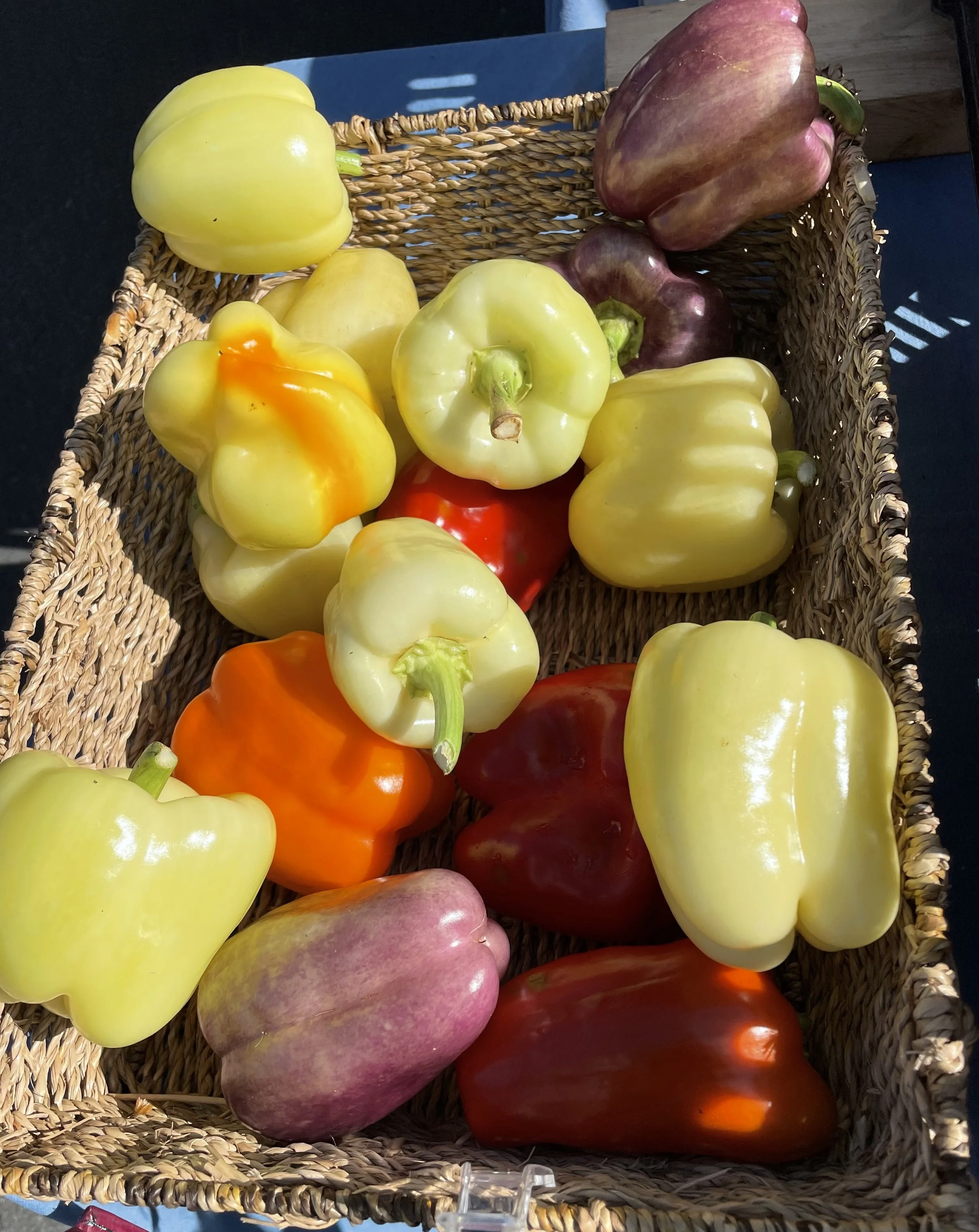
Sweet peppers: all colors of the rainbow.
How To Prep a Pepper
If your pepper recipe calls for slicing or dicing, there are a few simple rules to follow.
If you’re cutting up a bell pepper, do it this way: first, cut off the very top and the bottom, then cut straight through the flesh. Open and spread out the pepper, laying it flat. Use a very sharp knife to remove the ribs and the seeds. You’ll be left with a neat, rectangular slab of pepper, which you can now dice, julienne or cut any which way you like.
Chile or Pepper?
The words chile and peppers tend to be used interchangeably, and while there are many similarities, they are very different (especially if you can’t bear the heat.)
All true chiles belong to the genus Capsicum. What creates the spice is a chemical compound called capsaicin. Capsaicin can produce a mild warmth in your mouth, or make you cry, turn red and sweat profusely. Bell peppers don’t have capsaicin, so they’re sweet. Another confusing language glitch is peppercorns, which are essential in cooking but a different plant entirely. Lastly, a chile is a pepper and chili is soup. Understanding the differences will help spice lovers, flavor seekers and the curious navigate the produce aisle and spice rack with ease.